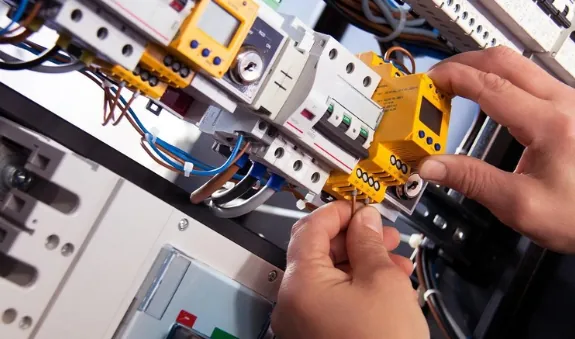
If you rent out a property in England, you are legally required to have a valid Electrical Installation Condition Report (EICR). Since July 2020, this has been a mandatory requirement for all private rented properties — and failure to comply can result in fines of up to £30,000. Maybury Energy Services provides EICR inspections for landlords across Coventry, Birmingham, Warwickshire, and the West Midlands. Here's everything you need to know.
What Is an EICR?
An Electrical Installation Condition Report is a formal document produced by a qualified electrician following a detailed inspection and testing of a property's electrical installation. It covers everything from the consumer unit (fuse box) and wiring to sockets, switches, light fittings, and earthing arrangements.
The report assesses whether the electrical installation is in a satisfactory condition for continued use, and identifies any defects, potential dangers, or items that don't meet current standards. Each item is coded as follows:
- C1 — Danger Present: Risk of injury. Requires immediate remedial action.
- C2 — Potentially Dangerous: Urgent remedial action required.
- C3 — Improvement Recommended: Not a legal requirement to fix, but advisable.
- FI — Further Investigation Required: The inspector could not fully assess a particular element and further investigation is needed.
A property receives an overall "Satisfactory" result if there are no C1, C2, or FI codes. C3 observations do not fail the report — they are recommendations only.
The Legal Requirements for Landlords
Under The Electrical Safety Standards in the Private Rented Sector (England) Regulations 2020, landlords in England must:
- Ensure the electrical installation is inspected and tested at least every 5 years by a qualified and competent electrician
- Obtain a report (EICR) from the inspector
- Supply a copy of the report to each existing tenant within 28 days of the inspection
- Supply a copy to any new tenant before they occupy the property
- Supply a copy to any prospective tenant who requests one within 28 days
- Retain a copy to give to the inspector for the next inspection
- Supply a copy to the local authority if requested
If the report identifies C1 or C2 issues, remedial work must be carried out and completed within 28 days (or sooner if specified by the inspector). Evidence that the work has been completed must then be provided to tenants and the local authority within 28 days of completion.
What Happens During an EICR Inspection?
An EICR inspection is non-invasive and typically takes between 3 and 6 hours depending on the size of the property and the age and complexity of the electrical installation. Our qualified electricians will:
- Inspect the consumer unit for condition, suitability, and compliance with current standards (including RCD protection)
- Test all circuits for continuity, insulation resistance, polarity, and earth fault loop impedance
- Inspect wiring, sockets, switches, and light fittings for condition and compliance
- Check earthing and bonding arrangements
The property's electricity supply will need to be turned off intermittently during the testing process. We always coordinate with tenants in advance to minimise disruption.
What If My Property Fails?
A "fail" result — meaning C1 or C2 codes are present — is not uncommon, particularly in older properties. Common issues include:
- No RCD protection on socket circuits
- Lack of main protective bonding
- Old or deteriorated wiring (rubber insulation, aluminium wiring)
- Overloaded or unsuitable consumer units
- Damaged or non-compliant accessories
Where issues are found, our team can carry out all necessary electrical remedial work and provide the required completion certificate. Our Part P certified electricians cover Coventry, Birmingham, Solihull, Nuneaton, Rugby, Leamington Spa, and the wider West Midlands — and we'll always explain what's needed and why before any work is carried out.
How Much Does an EICR Cost?
EICR costs at Maybury Energy Services vary depending on the size and complexity of the property. Contact us for a fixed-price quote before the inspection — there are no hidden charges.
If remedial work is required following the inspection, we'll provide a separate quote for any necessary work. We never carry out work without your agreement first.
Do I Need an EICR if My Property Is Newly Built?
New properties come with an Electrical Installation Certificate (EIC) issued by the contractor who carried out the installation. This provides assurance that the original installation was completed to the required standard. An EICR is not required immediately for a new build, but you will need one within 5 years of the EIC date (or sooner if required by your insurer or mortgage lender).
Need an EICR for Your Rental Property?
Our Part P certified electricians cover Coventry, Birmingham, and Warwickshire. We provide fixed-price EICRs and can carry out any required remedial work. Contact us today to book.